Pipe Termite Treatment
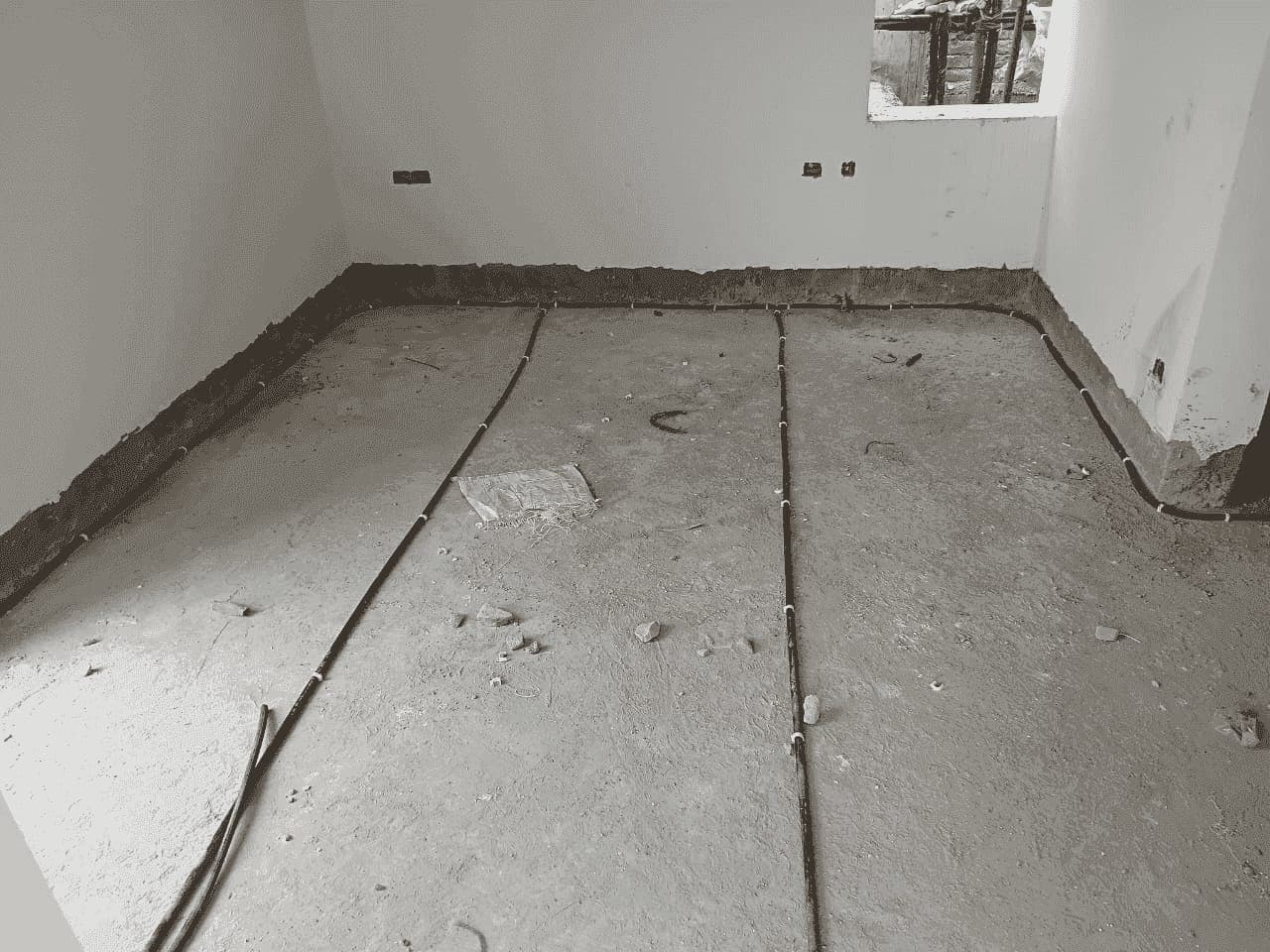
A network of perforated anti-termite pipes laid under the floor during construction or renovation. Termiticide is pumped in through a wall-mounted injection point, so the barrier can be renewed for years without drilling a single tile.
- Odourless, child & pet safe
- 24×7 · 31 branches
- 100% satisfaction guarantee

Pipe termite treatment - also called an anti-termite piping system or termite reticulation system - puts a permanent network of perforated pipes under your floor, along every wall where termites usually get in. When termiticide is pumped into the network, it seeps out through the pipe along its whole length and soaks the soil and the wall-floor joint, forming a continuous chemical barrier.
The big difference from ordinary termite treatment is what happens later. A normal soil barrier weakens over the years, and renewing it in a finished home means drilling holes through tiles, marble or wooden flooring. With a piping system, the barrier is renewed from an injection point on the wall - no drilling, no broken tiles, no dust.
How an anti-termite piping system works
Subterranean termites live in the soil and enter buildings from below - through cracks in the floor slab, gaps at the wall-floor joint, and around pipes and conduits. That joint is exactly where the pipe network is laid.
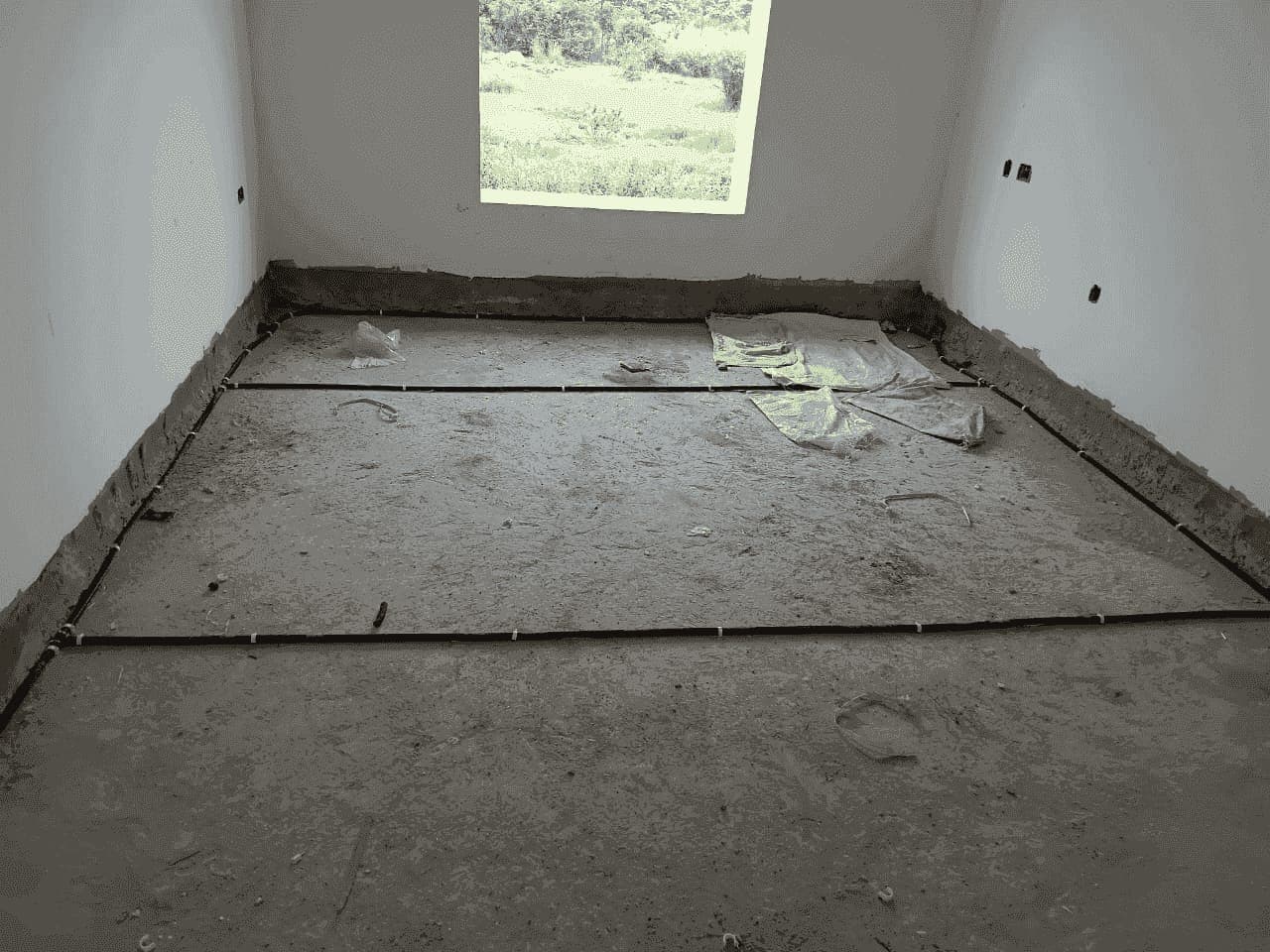
- Perforated pipes are clipped along the inside of every wall at floor level, and across larger floors where needed, before the flooring goes down.
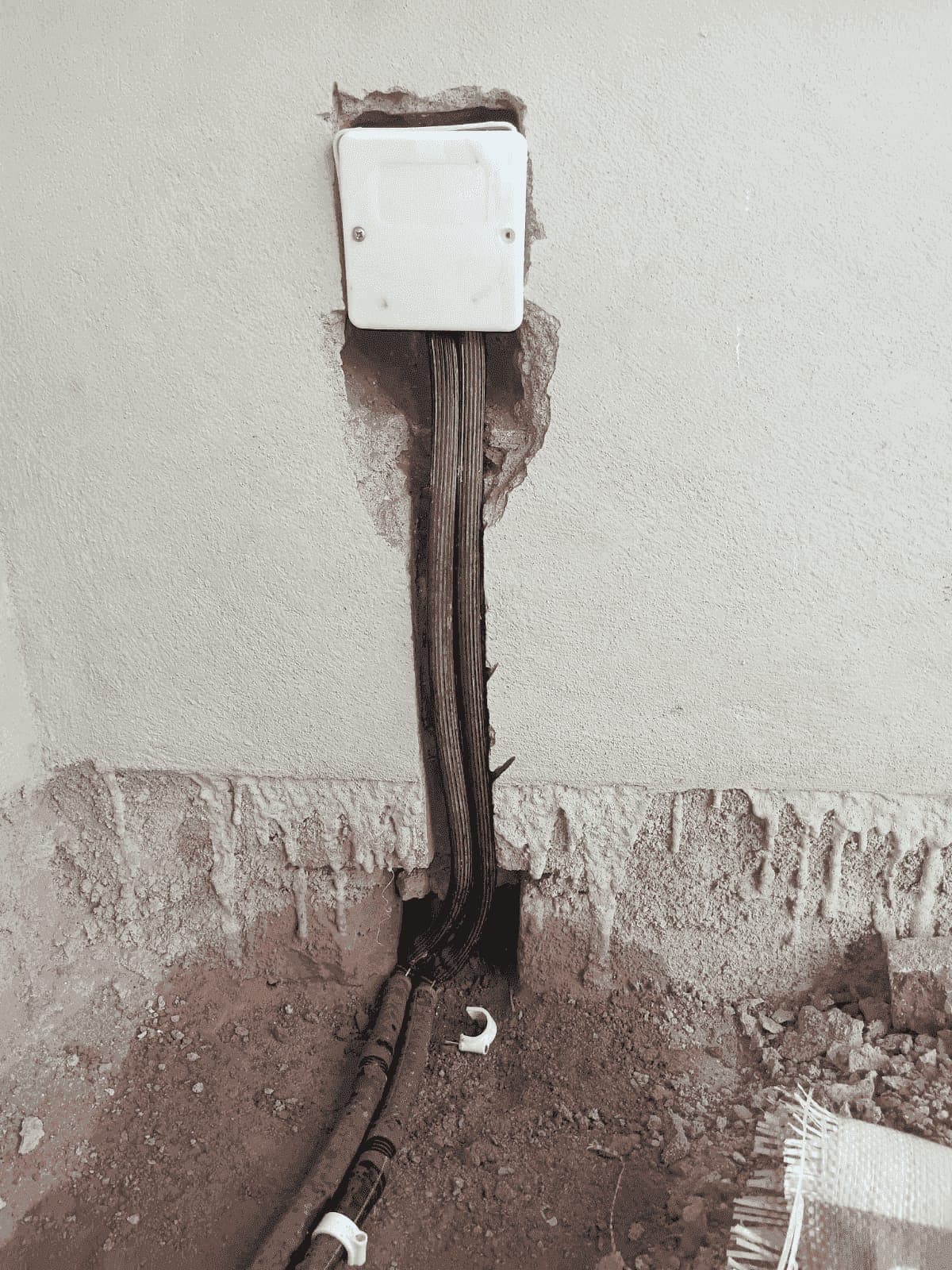
- The pipes run to injection boxes fixed on the wall, which stay accessible after the room is finished.
- Termiticide is pumped in under pressure, travels through the whole network, and leaks out evenly through the perforations into the soil and joints.
- Whenever the barrier needs renewing, the same injection point is used again - the floor is never opened.
How we install it, step by step
Photos from our own pipe termite jobs. The system goes in after the floor bed is ready and before tiles or flooring are laid, so we plan it with your contractor.
- STEP 01Inspect and plan the layout
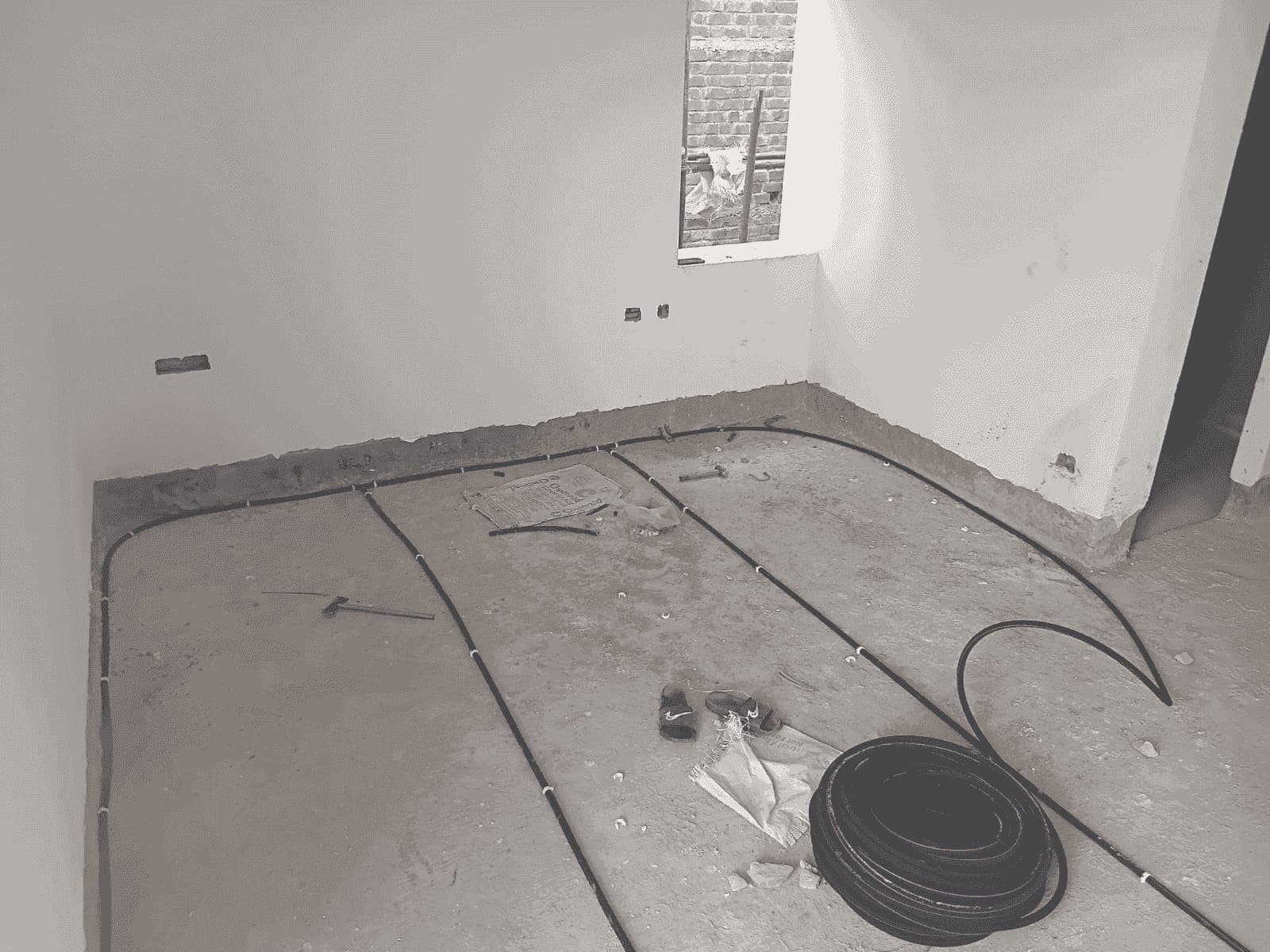
We walk the site, mark every wall-floor joint, door frame and service entry, and plan the pipe routes and where the injection boxes will sit.
- STEP 02Lay the pipe network
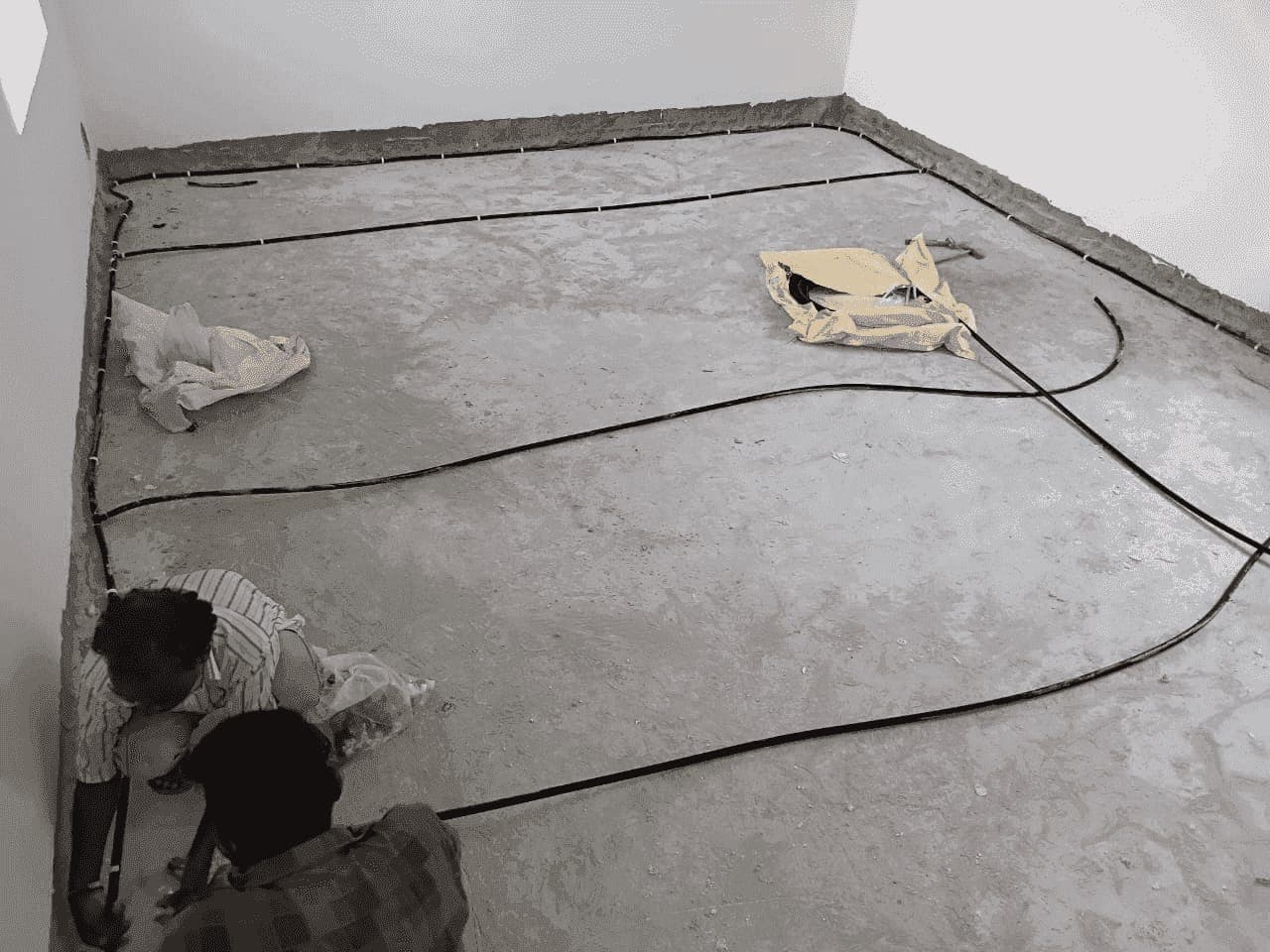
Perforated anti-termite pipe is laid on the prepared floor bed in continuous runs, so no section of wall is left unprotected.
- STEP 03Clip it along the wall-floor joint
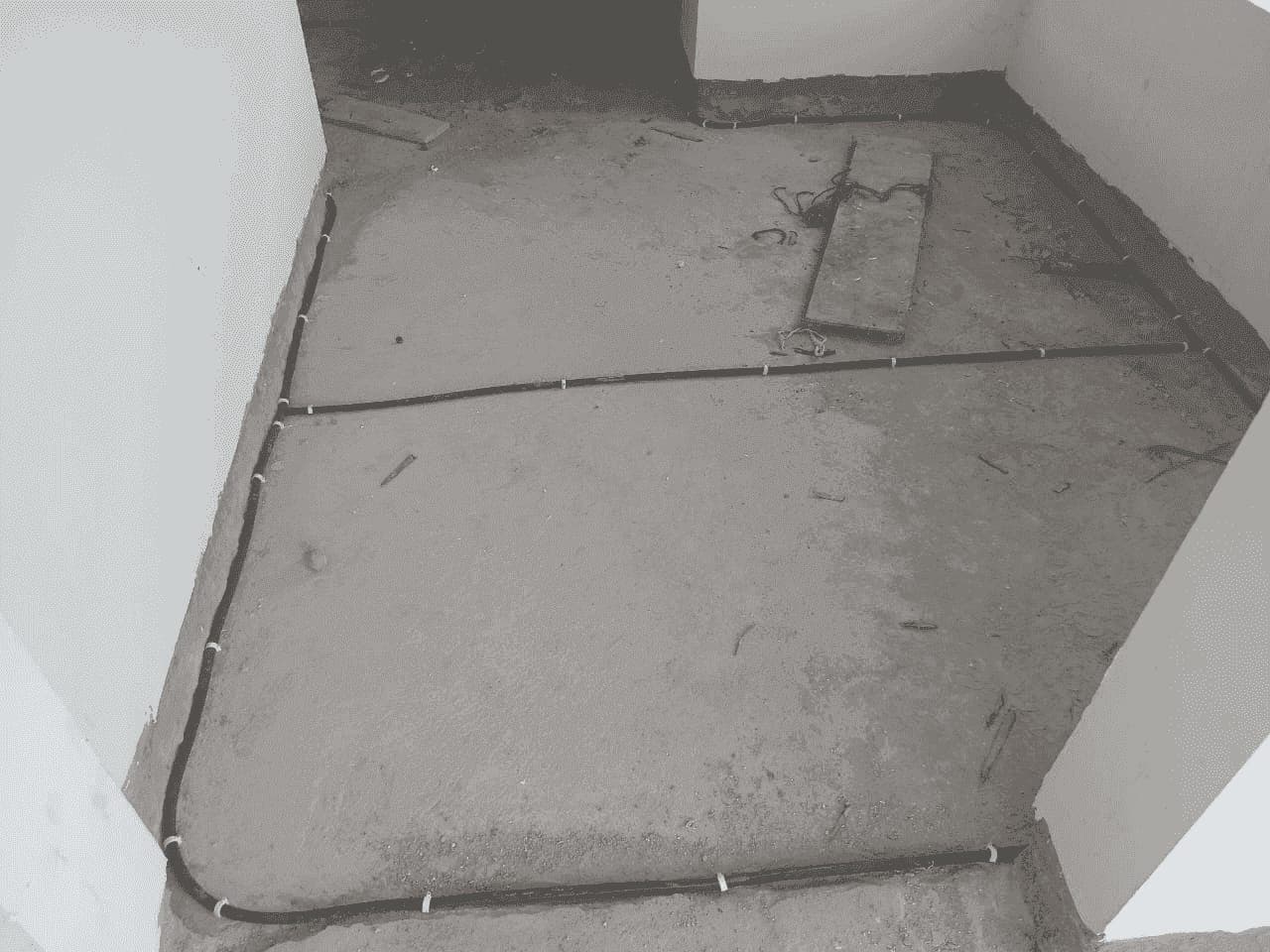
The pipe is fixed with clips right along the junction of wall and floor - the point termites use most - and around door frames and corners.
- STEP 04Fit the injection points
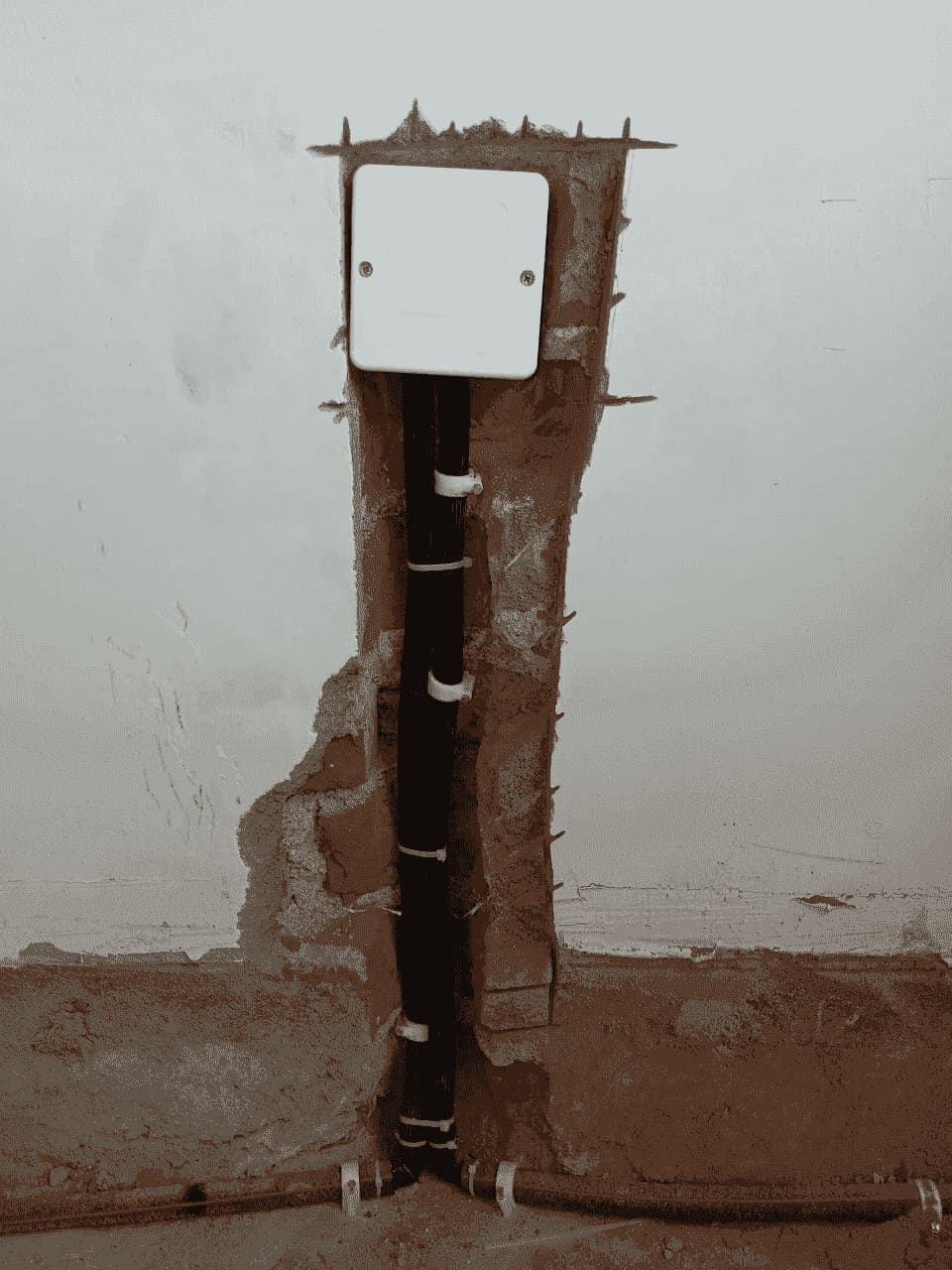
The pipe ends are taken up through a chase in the wall to an injection box, placed where it stays reachable once furniture is in.
- STEP 05Charge the system
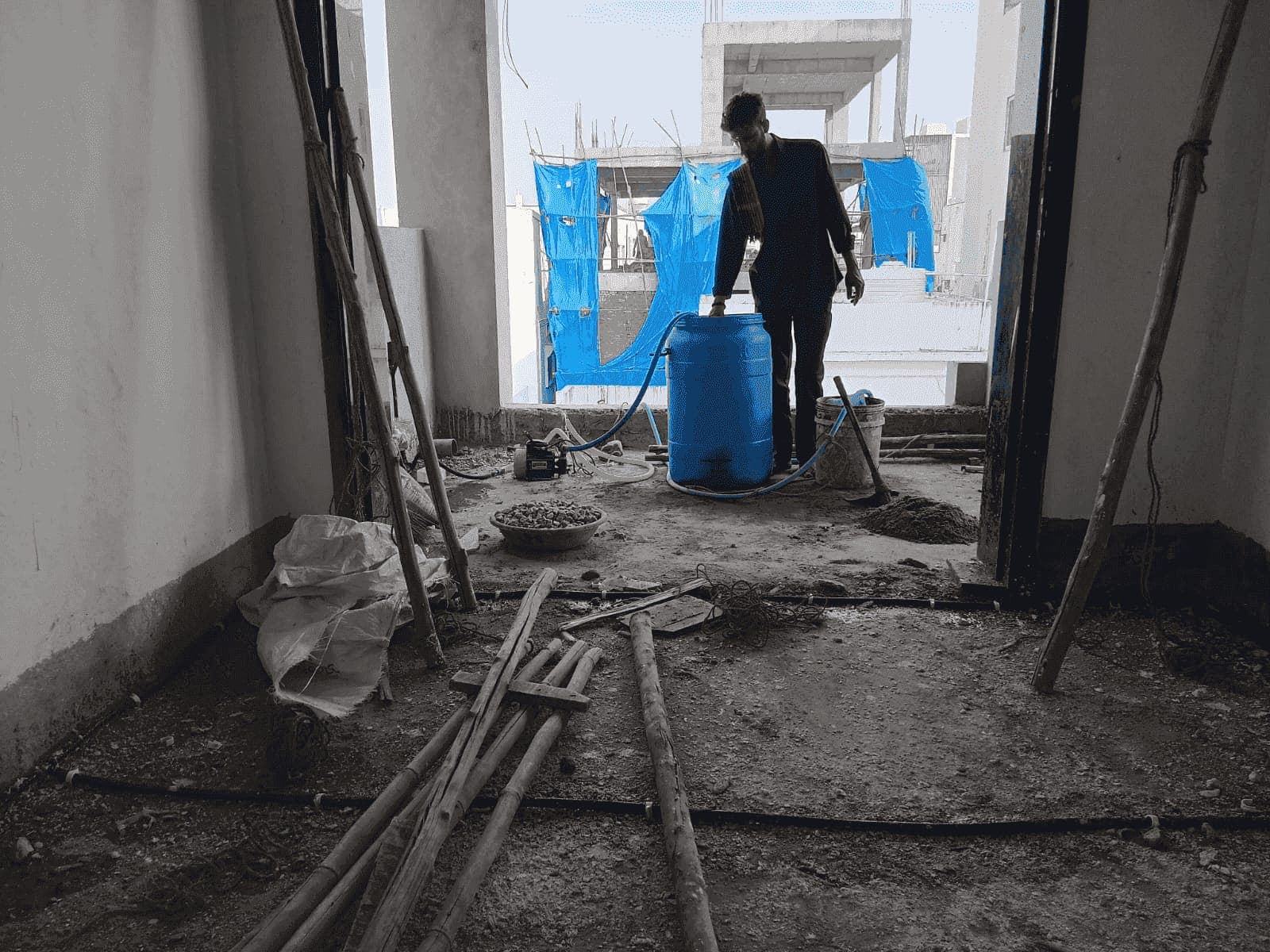
We pump termiticide into the network and check that it flows through every line before the flooring is laid over it.
- STEP 06Floor goes down, protection stays
Your contractor lays the tiles or flooring on top. The barrier is now under the whole floor, and every future recharge happens from the wall box.
Recharging without drilling
Every soil treatment slowly weakens with time, rain and soil movement. With a piping system, renewing it is simple: our technician connects to the injection box, pumps fresh termiticide through the network, and closes it again.
There is no drilling through flooring, no furniture to move and no dust in the room. We recommend a yearly termite check, and we recharge the system whenever the inspection shows it is due or at the first sign of termite activity.
Why choose a piping system
No drilling, ever
Your tiles, marble and wooden floors stay intact - the barrier is renewed from the wall box.
Protection along every wall
Pipes follow the wall-floor joint all the way round, the route termites use to get in.
Renewable for years
The same network can be recharged again and again, instead of re-treating the soil from scratch.
Clean and odourless
The termiticide stays under the floor inside a closed system - nothing is sprayed into your rooms.
Works with other treatments
Best combined with pre-construction soil treatment for new buildings, or with drill-and-inject treatment for existing walls.
Planned with your contractor
We fit the installation into the construction or renovation schedule, before flooring starts.
Who it is for
New bungalows, row houses and independent homes - installed while the floor bed is being prepared.
Flats and offices under renovation - whenever the old flooring is being removed and relaid.
Builders and developers - as an added layer of protection on new projects, alongside pre-construction soil treatment.
Ground-floor shops, clinics and godowns - where termites coming up through the floor can damage stock, records and wooden fittings.
Homes with costly flooring or woodwork - marble, Italian tiles, wooden floors and built-in wardrobes you never want to drill.
Already living in the home?
Pipes have to go under the flooring, so a piping system can only be installed during construction or when the floor is being relaid. If your floor is finished and you have termites now, our drill-and-inject termite treatment protects the building without waiting for a renovation - and we can plan piping for the next time you redo the floor.
Pipe termite treatment - your questions
Can a piping system be installed in an existing flat?
Only when the flooring is being removed and relaid, because the pipes sit under the floor. If you are renovating, tell us before the new tiles go down. Otherwise, we treat existing homes with drill-and-inject termite treatment.
How often does the system need recharging?
We recommend a termite inspection every year. The system is recharged whenever the inspection shows it is due, or straight away if you notice mud tubes, hollow-sounding wood or termite wings - all through the injection box, without drilling.
Does it replace pre-construction anti-termite treatment?
No - it works best alongside it. Pre-construction treatment protects the soil under the foundation when the building is first built; the piping system lets you renew protection along the walls later without breaking the floor.
Is the chemical safe for my family?
The termiticide is pumped into a closed pipe network under the floor, not sprayed in the room, and we use registered, odourless products applied by trained technicians. You do not need to move out for a recharge.
Where are the injection points placed?
In a wall box at a convenient height, usually near a door or a corner that will not be blocked by heavy furniture. We agree the positions with you or your contractor before the pipes are laid.
Building or renovating? Plan your termite protection now
Tell us about your site and our team will call you to arrange a free inspection before the flooring starts.
Related services
All 22 services →- Pre-Construction Anti-Termite Treatment Services
Protecting your property before construction begins is one of the most cost-effective and preventive pest control strategies. Once termites invade, they can: Weaken the foundation and wooden structures Compromise building safety and aesthetics Lead to expensive repair costs in the future Spread rap
Learn more - Wood Borer Pest Control Services
Wood borers may be small, but their damage is extensive and costly: They hollow out wooden structures, weakening their integrity They cause fine powdery dust (frass) to appear near tiny exit holes Over time, they can ruin expensive wooden furniture and décor They multiply quickly if left untreated
Learn more - Termites Control Services
Termites cause more damage than floods, fire, and storms combined. Often called "silent destroyers," they can secretly invade your home or commercial space and cause extensive structural damage before you even notice. At SSD Pest Control Services Pvt. Ltd., we provide expert Termite Control Services
Learn more
Get your space protected
Free inspection, fixed quote, 100% satisfaction guarantee - across all 31 branches, 24×7.