Pre-Construction Anti-Termite Treatment: A Practical Guide for Builders and Home Owners
Termites are often called silent destroyers because the damage is usually done long before anyone sees a sign of them. They feed on the cellulose in wood, paper and even drywall, and in a new building that means door frames, wooden fittings, flooring and furniture.
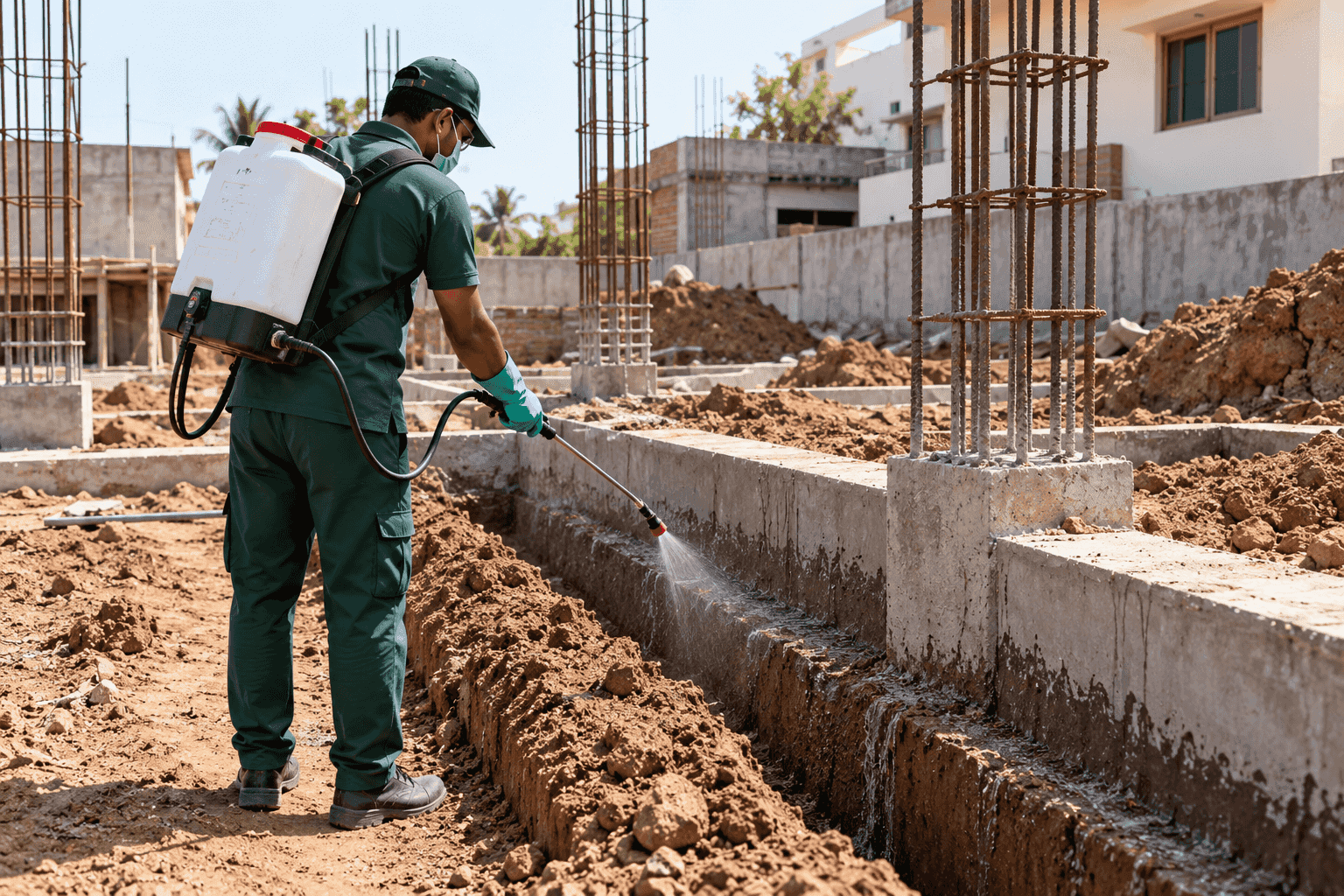
The most cost-effective time to protect a building from termites is before it is built. While the soil is still exposed and the foundation is still open, a chemical barrier can be applied evenly and thoroughly. Once the floors are laid and the walls are plastered, getting the same coverage is much harder.
Why treat the soil before you build
- Subterranean (soil-dwelling) termites are among the most common, and they approach a building from underground.
- A continuous chemical barrier in the soil stops them from reaching the structure from below.
- Fixing a termite problem after construction means drilling and injecting into finished floors and walls, which is more disruptive and more expensive.
- Termite damage is often hidden behind walls and under floors, so it can spread for a long time unnoticed.
The five stages of a proper pre-construction treatment
A well-run treatment follows the building sequence rather than being a single visit. SSD follows ISI-approved procedures and works to Indian Standard IS 6313 (Part II).
- Site inspection - assessing the soil type, moisture levels and layout so the treatment plan fits the site.
- Soil treatment - applying anti-termite chemicals to the excavated soil before foundation work starts.
- Trench and foundation treatment - treating the bottom and sides of foundation trenches and pits.
- Backfill soil treatment - treating the soil used to refill around the foundation, so the barrier is continuous around the structure.
- Floor slab and junction treatment - treating the sub-floor area and the junctions of walls with concrete before the slab is laid.
What chemicals are used
Treatments use ISI-approved termiticides, typically chlorpyrifos or imidacloprid based. Modern formulations are odourless and non-staining, and are considered safe for people and pets once they have been applied and the area is dry.
Questions to ask before you hire a contractor
- Will the treatment follow IS 6313 (Part II), and at which construction stages will you visit?
- Which chemical and concentration will be used, and can I see it on the label?
- Will you provide a treatment certificate for project compliance?
- What warranty is offered, and what does a re-service involve?
- What happens after the building is finished - is there an annual maintenance option?
Who needs it
Individual plot owners building a home, real estate developers and builders, commercial complexes, educational institutions and hospitals, factories and warehouses, and government infrastructure projects all benefit. The earlier in the construction timeline the booking is made, the easier it is to fit the visits around the schedule.
Protection does not stop at handover
A pre-construction treatment protects the building from the ground up, but termites can still find other routes into wooden furniture, false ceilings and fittings once the building is occupied. An annual inspection or maintenance plan catches early activity before it becomes damage.
If you are planning a new build, talk to SSD before the foundation work starts. We will inspect the site, explain the plan stage by stage and give you a written quote.
Get a free pest inspection
Tell us where the problem is and our team will call you back to confirm.
Need help with this?