Pigeon Droppings and Bird Netting: Protecting Your Balcony, AC Units and Building
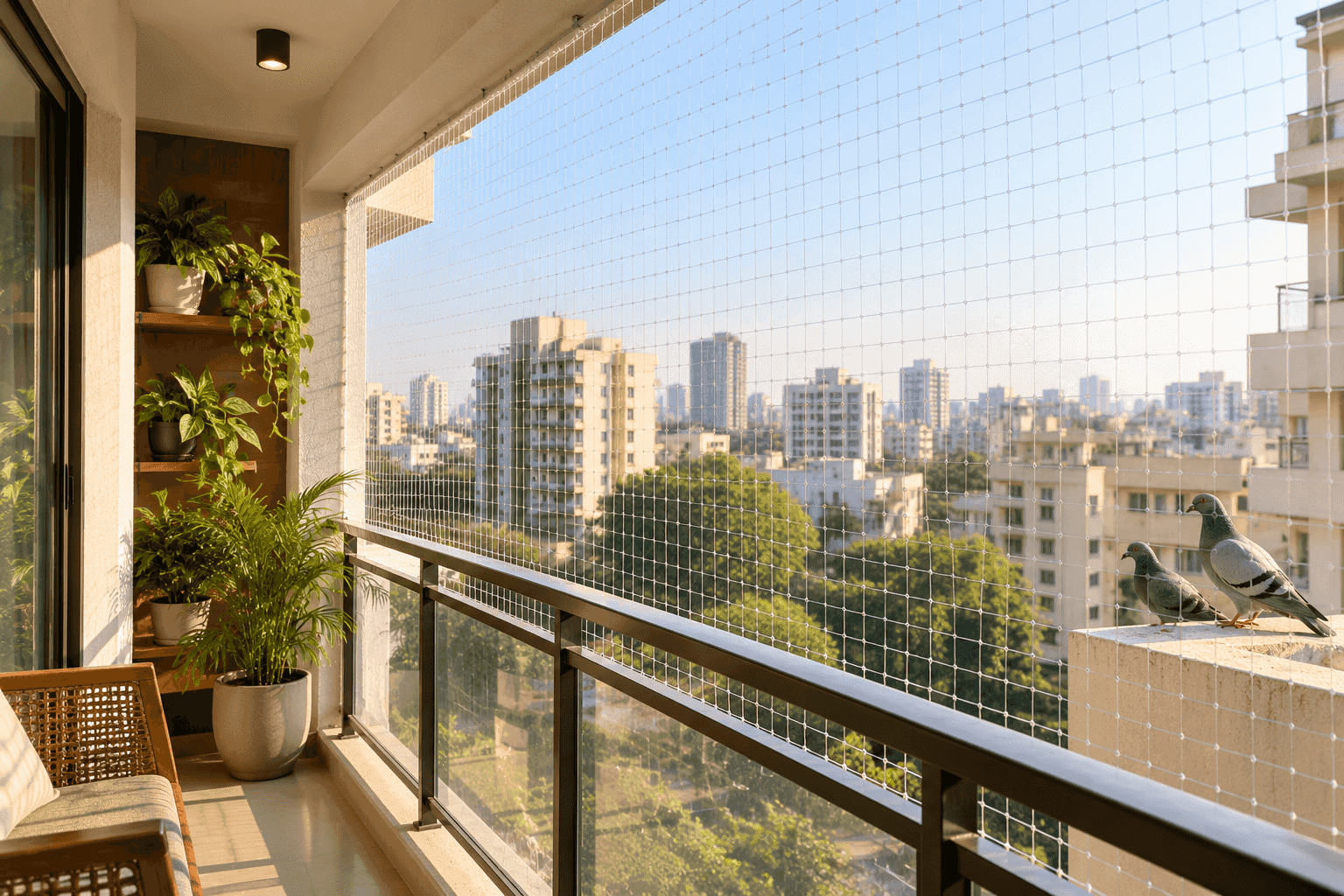
A pigeon on a window ledge looks harmless. A flock roosting on a balcony or an AC outdoor unit is a different story. Over weeks, droppings build up, nests block vents and ducts, and the noise and smell begin to affect everyone who lives or works nearby.
Why bird droppings are a real problem
- Hygiene - droppings can spread fungal infections and bacteria, especially when they dry and turn to dust.
- Property damage - bird droppings are acidic and can stain and eat into paint, stone and metal surfaces.
- Blocked vents and ducts - nesting material can obstruct ventilation shafts, exhausts and drainage.
- Smell and cleaning costs - repeated cleaning of balconies, terraces and common areas adds up.
- Noise and disturbance - cooing and flapping, particularly in early morning.
Where pigeons settle
Pigeons look for sheltered ledges, so they gravitate to balconies, window sills, AC outdoor units, ducts and shafts, rooftops, warehouse beams and the open sides of buildings. Once a flock has found a good spot and left droppings there, they tend to keep coming back.
Why netting works
Scaring methods wear off as birds get used to them. Netting is a physical barrier: the birds simply cannot get to the spot where they would roost or nest. Good quality nets are transparent and discreet, so the balcony view stays clear, and they are humane - the aim is to prevent nesting and roosting, not to hurt wildlife.
What a good installation looks like
- A site assessment first, so the net is designed around where the birds actually land
- UV-stabilised, weatherproof and non-corrosive netting material, with a lifespan of five years or more
- Strong anchoring with no gaps along the edges, corners or around pipes
- No damage to the building structure during fixing
- A custom fit - balconies, windows, ducts and shafts, AC outdoor units, rooftops and warehouses all need different layouts
Cleaning droppings safely
Clean the area before the net goes up, and do it carefully. Wear a mask and gloves, dampen dried droppings before you remove them rather than dry-sweeping, and wash the area afterwards. For large accumulations or hard-to-reach places, ask a professional to handle it.
Housing societies and commercial buildings
In a society, bird problems usually affect many flats at once, so it is worth agreeing a common plan through the managing committee rather than netting one balcony at a time. Factories, warehouses and offices should also net loading bays, shafts and open building spaces, since nesting there can disrupt operations.
Netting is permanent - plan it once
Good bird netting is low-maintenance and long-lasting, which is why it works out cheaper over time than repeated cleaning. A quick check once or twice a year for tears or loose fixings is usually all that is needed.
SSD installs humane bird netting for homes, offices, factories and buildings, with a free site survey and a personalised quote.
Get a free pest inspection
Tell us where the problem is and our team will call you back to confirm.